Attic Leaks or Condensation?
In a Michigan winter, a wet attic isn't always a roof leak. Warm, moist air from the house can condense and freeze on the cold underside of the roof.
Request a rooferLeak signs
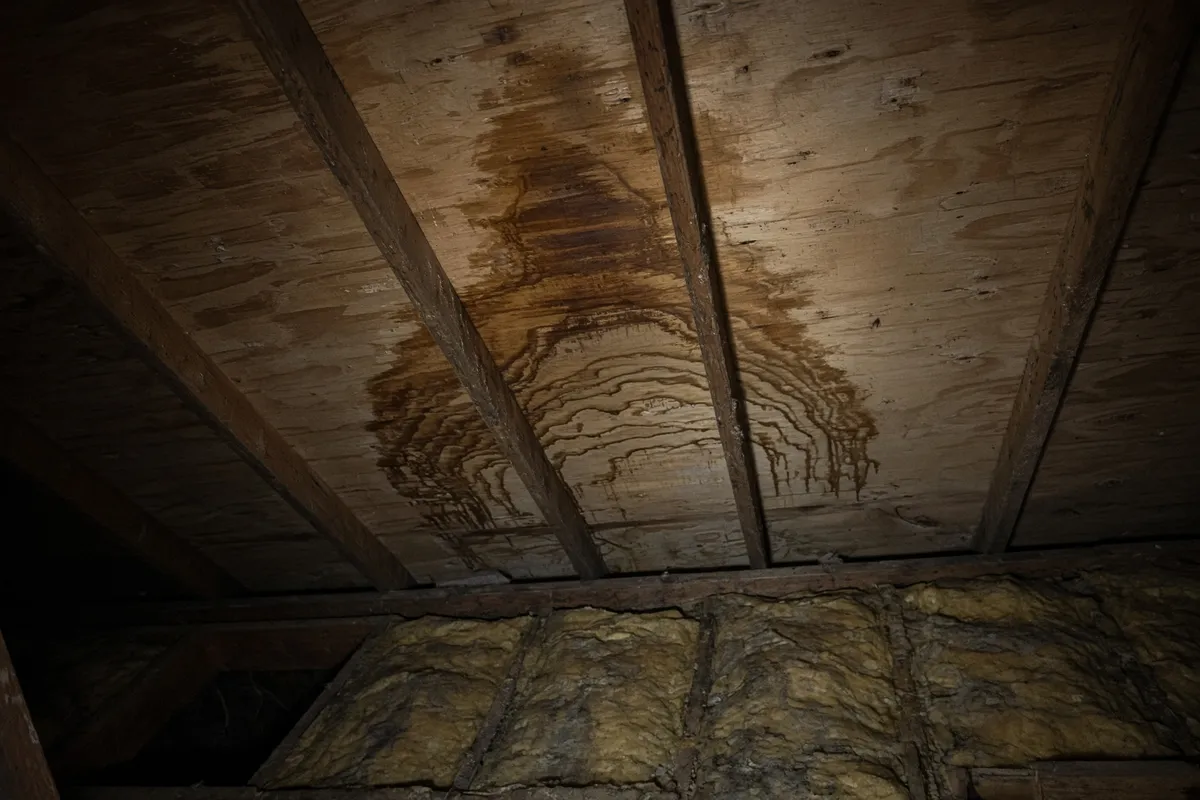
Stains after rain or snowmelt, drips near vents and chimneys, and wet spots that follow the slope.
Condensation signs
Frost on nails and decking in cold weather, dripping on a sunny winter day and damp spread evenly across the attic.
Bathroom fans
Fans that vent into the attic add moisture. They should duct outside.
Air leaks
Gaps around fixtures, hatches and pipes let warm, damp air into the attic.
Ventilation
Blocked soffit vents trap moisture. Clear airflow keeps the attic dry.
Insulation
Damp or compressed insulation stops working. Replace it once the cause is fixed.
Mould
Damp wood can grow mould. Dry and treat it.
Tell the roofer
When and where the water appears, and the weather at the time.
Get help
See roof leak repair.
A simple test
On a cold, dry week with no melting, look at the wet area. If frost builds on nails and the underside of the decking with no rain or melt, the moisture is coming from inside the house. If it only appears after rain or during a thaw, the roof or an ice dam is the more likely cause.
Humidifiers
A furnace humidifier set too high in a very cold spell can push extra moisture into the attic through any gap in the ceiling. Lower the setting when outdoor temperatures drop well below freezing.
Kitchen and dryer vents
Range hoods and dryer vents must vent outdoors, never into the attic or soffit space, where their moisture will collect on cold wood.
More roofing guides
Roof trouble in the Kalamazoo area?
Send a request and a roofer will get in touch. Requests answered 7 days a week.
Prefer email? [email protected]